
Developed during Logitech’s four-day Ctrl+Alt+Include Design Challenge at Logitech Headquarters in Cork, Ireland, #EOTD is a modular wireless earbud and charging case concept designed for autistic members of Gen Z. Informed by Logitech’s accessibility research, my own lived neurodivergent experience, and the latest market reporting, the project asked: how might earbuds support both the sensory and aesthetic needs of autistic Gen Z users while addressing stimming, object permanence, comfort, and the interest-based nervous system?


The result was #EOTD—short for Ear of the Day—a product system designed to work with the neurodivergent brain rather than against it. Inspired by the practice of dopamine -dressing, the project rejects the common tradeoff between accessibility and aesthetics by bridging assistive technology with fashion. Instead of clunky, medicalized hardware, #EOTD offers jewelry-like ear modules and charging cases designed as playful bag charms: products meant not to be hidden, but displayed, enjoyed, and integrated into personal style.


The core earbud system supports a range of sensory needs through listening modes such as transparency, active noise cancellation, and adaptive mode. Together, these features help autistic users navigate auditory processing differences, reduce overstimulation, and shift more easily between sensory-seeking and sensory-avoidant states by having greater control over their auditory input.
The modular attachments allow users to choose between discretion and expression depending on their mood, environment, and daily needs. Soft silicone discrete modules sit flush with the ear for comfort and subtlety, and side-sleeping, while fashion modules accessorize, incorporating additional contact points that make them easier to wear, remove, and keep track of.
This approach offers a more sustainable response to trend cycles in fashion tech. As accessory earbuds continue to grow in popularity, users are often pushed to buy separate devices for comfort and style. #EOTD avoids this duplication by adapting a single core product through interchangeable components, reducing redundancy, overconsumption, and unnecessary e-waste.

Rather than treating storage as an afterthought, the charging case becomes an active part of the user experience. Styled as a lightweight bag charm with interchangeable sheaths, it is intentionally designed to be visible, collectible, and dopamine-inducing. By increasing the cases’ size and visual presence, the sheaths help address object permanence challenges and encourage consistent use, while select designs also incorporate fidgetable features for stimming.
Themed module and sheath collections expand opportunities for outfit coordination and collectibility, creating a more emotionally-engaging marketable range.

Built iteratively across Onshape, Zbrush, Greasshopper, and Blender, this project demonstrates my ability to combine beauty, meaning, and function in a single product system—grounding artful form-making in serious UX design-thinking, accessibility research, and commercial relevance. It shows how I approach design as both problem-solving and self-expression: creating products that not only assist users, but empower and adorn them.


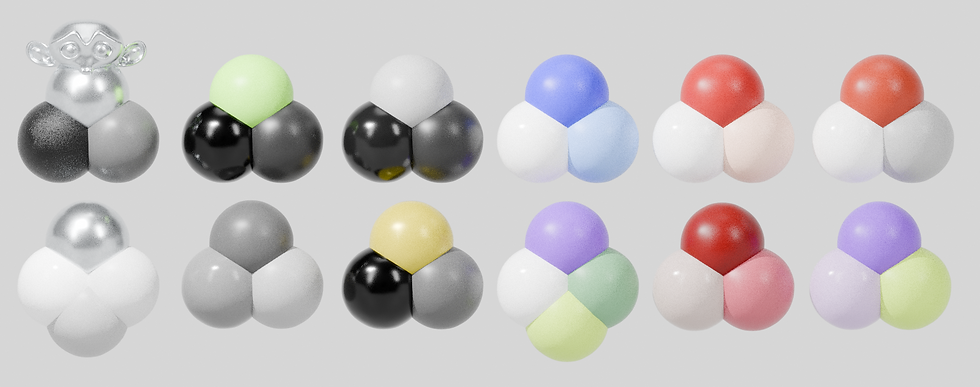
Process Gallery: 1. Initial Sketches, 2. 3D modeling iterations, 3. Logitech-inspired CMF library
The design was awarded Best Process by a Logitech jury of product designers, mechanical engineers, and CMF specialists, who recognized #EOTD for its deeply research-informed approach, multi-CAD workflow, strong UX and problem-solving logic, and imaginative aesthetic direction.

